

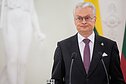









Lithuania will continue pushing back migrants at its border with Belarus despite the entry into force of the EU's Migration and Asylum Pact, Interior Minister Vladislavas Kondratovičius has said, though the new rules will mean longer processing times for migrants who have entered via Latvia.
The EU Migration and Asylum Pact became applicable across all member states on June 12. NGOs in Lithuania, Latvia and Poland immediately called for a review of pushback practices, arguing that even under exceptional circumstances, member states remain bound by fundamental human rights obligations.
Pushbacks legal during state of emergency
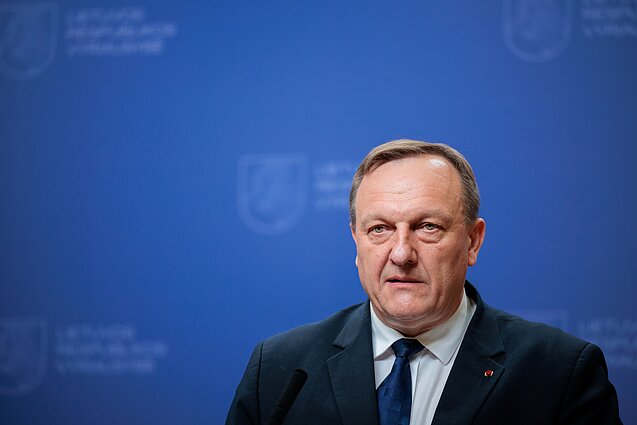
Asked whether Lithuania's pushback policy remained lawful ahead of the parliament adopting the legislative amendments transposing the pact, Kondratovičius said it did, as the country's state of emergency remained in force.
"The main message is that our state-level state of emergency regarding illegal migration is still in effect. Therefore, we will continue our policy of denying entry to illegal migrants as before," the minister told BNS in an interview.
The government approved the implementing legislation last Thursday, Kondratovičius said it would be presented to parliament the following week, with the aim of adoption before the end of the spring session.
Secondary migration the bigger challenge
The minister said the more significant impact of the new rules would be felt not at the Belarusian border itself but in handling secondary migrants – like people who cross into Latvia from Belarus and then travel through Lithuania towards Western Europe.
Under a tripartite Baltic agreement, such individuals are transferred to the country through which they first entered EU territory, like, in this case, Latvia, within 30 days. The new pact introduces an initial screening requirement – covering identity, health status and security assessment – before a transfer can take place.
If Latvia has already screened a person, they will be returned immediately; if not, Lithuania must carry out the check first, potentially extending the process to up to 37 days in total, since the screening takes around a week to conclude.
Kondratovičius said additional accommodation capacity is being planned to handle larger numbers, with facilities at Kybartai and other locations under consideration. Lithuania also plans to deploy additional border forces to assist Latvia at its border with Belarus, and is in discussions with Poland, which is considering a similar move.
The minister noted that migration pressure at the Polish-Belarusian border had dropped sharply in recent months, suggesting flows may be shifting towards Latvia.
"It is likely that flows in Latvia from Belarus could also increase. We will have to see how it goes," he said.
Poland's border controls
On Poland's temporary restoration of internal Schengen border controls with Lithuania and Germany, in effect until October 1, the minister said he expected Warsaw to wind them down.
"What I hear from the Polish side is that they are determined to cancel the restored internal border control," he said, adding that Poland's decision had been driven partly by its own domestic political dynamics and partly by Germany's approach to migration.
Kondratovičius said Lithuania was consistently pressing, in all formats, for the Schengen area's principle of free movement to be upheld, while acknowledging that countries facing acute external pressure could not always be expected to manage alone.
"Both solidarity and common management of forces, as well as measures such as the restoration of border controls, are important," he said.
Lithuania legalised its pushback policy in 2023; since 2021, the State Border Guard Service has prevented more than 25,300 illegal crossings.

Newsletter
Every Friday morning.